Lessons for the future from Mauna Loa’s 1916 eruption

USGS Volcano Watch - The year 1916 not only marked the birth of Hawaiʻi Volcanoes National Park, but also is remembered for the eruption of the Honamalino flow from the Southwest Rift Zone (SWRZ) of Mauna Loa 106 years ago. The eruption began on May 19th, 1916, and was brief, lasting less than two weeks, but it offers lessons for future Mauna Loa eruptions. Dr. Thomas Jaggar, who had founded the Hawaiian Volcano Observatory a mere four years earlier in 1912, attempted to forecast the next Mauna Loa eruption based on the pattern of rift zone eruptions on the volcano since 1868. The previous rift eruptions alternated locations between the Northeast Rift Zone (NERZ) and the SWRZ though these were frequently separated in time by eruptions confined to Mauna Loaʻs summit caldera (Moku‘āweoweo). Mauna Loa had erupted in 1907 from the SWRZ and in 1914–15 from the summit. Therefore, Dr. Jaggar hypothesized that the next Mauna Loa flank eruption would occur from the NERZ, assuming the prior pattern meant there was an underlying reason for the alternation of rift eruption sites. The May 19, 1916, SWRZ outbreak deviated from the pattern of eruptions Dr. Jaggar had observed at Mauna Loa, suggesting that the eruption probability might be more like a “coin flip” model. While the long-term odds for flipping heads and tails are equal, it doesn’t mean you can’t flip four tails in a row. Like many eruptions on the Island of Hawai‘i, the May 19th, 1916, eruption was preceded by earthquake activity. Residents of Ka‘ū felt numerous earthquakes early in the morning before an impressive steam plume, visible from Kīlauea’s summit, rose high up on Mauna Loa’s SWRZ at about 7:15 a.m., marking the start of the eruption. Activity in this high-elevation area, technically considered the summit region, lasted less than 24 hours. Later, another swarm of earthquakes shook Ka‘ū residents as lava intruded the SWRZ resulting in a line of fissures opening on the lower SWRZ on the evening of May 21. Lava from the vents spread over the crest of the rift zone feeding lava flows on either side—the Honomalino flow moving down the steep southwest side and the larger Kahuku flow spreading more widely to the southeast. The branched nature of the 1916 eruption—with the eruption supplying lava flows on either side of the rift zone—coupled with the relatively small total erupted volume ensured that the lava flows did not travel very far. Only one homestead (the Bertlemann’s) was destroyed during the 1916 eruption, which ended on May 31. The 1916 eruption was followed in relatively rapid succession by Mauna Loa’s 1919 and 1926 SWRZ eruptions with no intervening eruptions. During both eruptions, lava flows reached the ocean and destroyed Hawaiian coastal villages (Alika and Hoʻōpūloa). The 1919 and 1926 lava flows would have cut Highway 11 and caused severe disruptions for current residents. The village of Miloliʻi and its boat access were narrowly missed by the 1926 flow. Several other lava flows from Mauna Loa’s SWRZ, including in 1868, 1887, and 1950, have also traveled quickly through this region, crossing roads and entering the ocean, sometimes within a matter of hours of the vent opening. The 1950 eruption on the SWRZ was the largest recorded Mauna Loa eruption and fed flows on either side of the rift zone crest like the 1916 eruption. In a contrast to the 1916 eruption, three lava flows erupted in 1950 entered the ocean within less than 24 hours of that eruption starting. A repeat of the 1950 eruption is of great concern today due to the increased population of the area. What can we learn from Mauna Loa’s 1916 eruption? Though eruptions and volcanoes exhibit patterns, they do not always follow them. While repeats of most recorded SWRZ eruptions would at a minimum cut off Highway 11, the smaller 1916 eruption demonstrates this is not always the case. Over the past 200 years, Mauna Loa rift zone eruptions are evenly divided between the SWRZ and the NERZ. However, the remarkable run of four SWRZ eruptions in a row (1907, 1916, 1919, 1926) shows the weakness of long-term normal probability models in forecasting eruptions in the short term. It’s a constant reminder that none of us should grow complacent living on our volcanic island. --- Images and captions from USGS: [1] Image of the steam plume that accompanied the start of Mauna Loa’s 1916 eruption on the Southwest Rift Zone. View is from within Hawai‘i Volcanoes National Park, with Kīlauea caldera wall visible in the middle of the photo. Photograph by H. Wood and courtesy of University of Hawai‘i at Mānoa Hamilton Library. [2] Map of lava flows erupted from the Southwest Rift Zone of Mauna Loa, using data from the Geologic Map of the State of Hawaiʻi (Sherrod and others, 2021). Lava flows erupted in 1950, 1926, 1919, 1916, 1907, 1887, and 1868 are shown in different colors on the map. Basemap sources: ESRI, HERE, Garmin, Intermap, increment P Corp. USGS map. --- Volcano Watch is a weekly article and activity update written by U.S. Geological Survey Hawaiian Volcano Observatory scientists and affiliates.

Episode 44 Has Begun

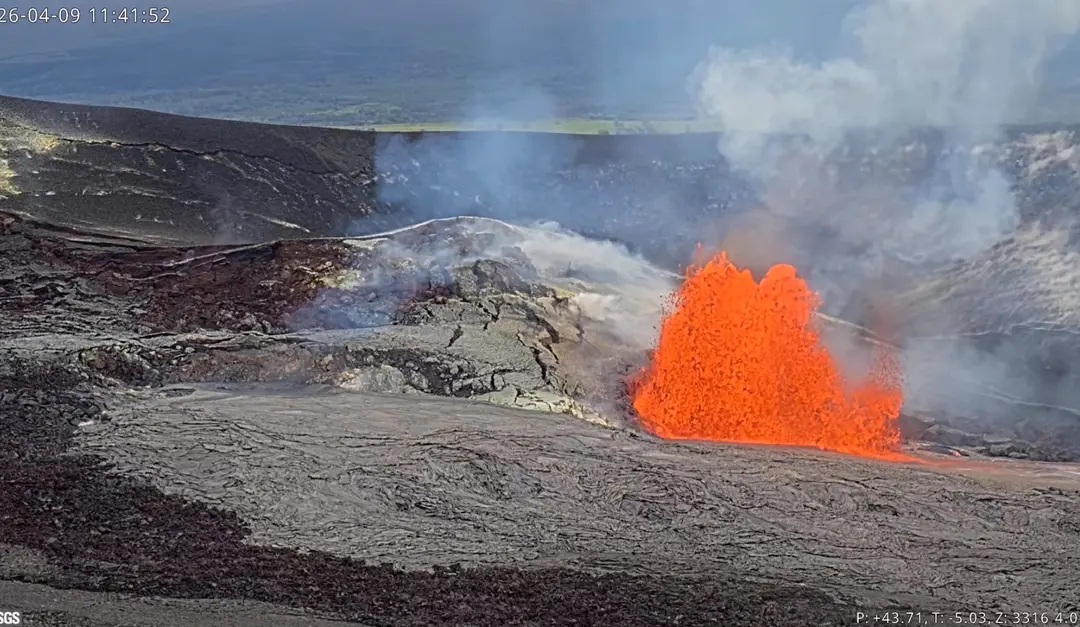
Episode 44 Has Begun

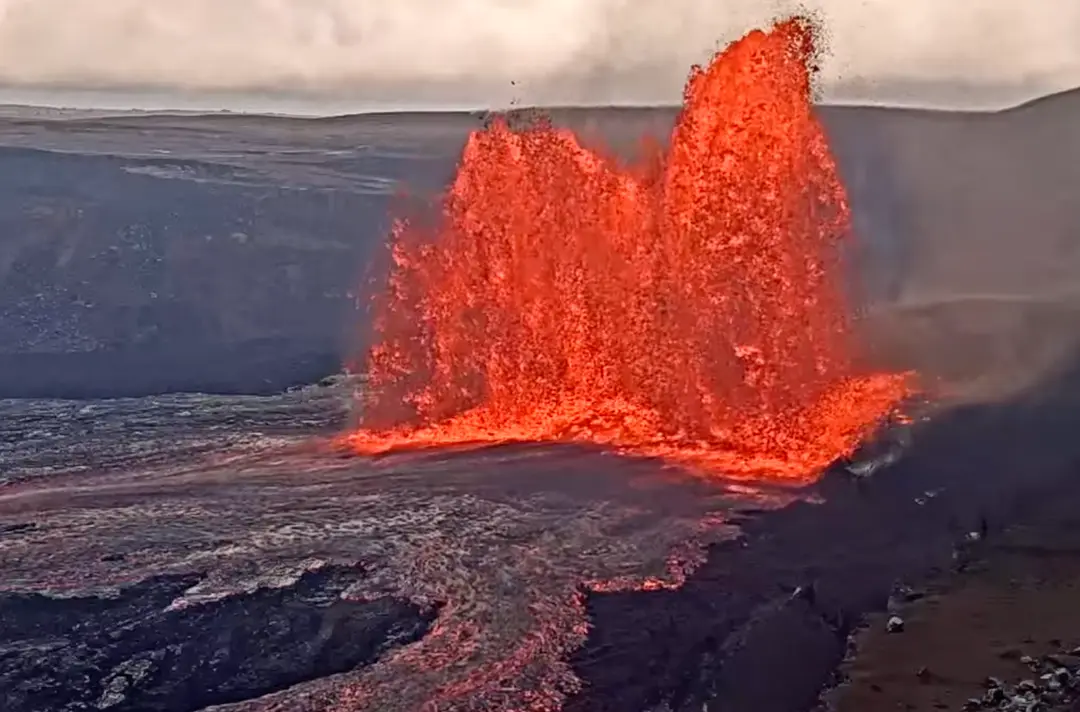
Kilauea Message 2026-04-09 11:36:36 HST. Lava fountains at the north vent in Halemaʻumaʻu are currently reaching about 35 meters (115 feet) in height, and they can be expected to reach maximum heights in 1–2 hours.

R

Ryan Finlay

Help Ken Boyer in His Recovery Journey

Help Ken Boyer in His Recovery Journey

Our friend Ken Boyer is facing some pretty serious health challenges right now. Ken was an early friend and contributor to Hawaii Tracker over 8 years ago now. Any support you can give him would be appreciated and please keep him and his ohana in your prayers! 🙏 If anyone would like to support Ken and his family you can do so at the link below. https://www.gofundme.com/f/liver-transplant-journey-recovery-nsvfc Here is the post Ken shared on social media today: "Hello my dear friends and family, this is gonna be a long one, sorry but I feel it’s time I share my story that very few know. The last few years have been extremely difficult for me and my family. We’ve suffered tremendous loss and I found myself feeling ill also. Very weak, extremely tired and fatigued, abdominal pain, unable to think clearly and at times not even being able to form sentences, unable to remember things, etc…I was very concerned and went to the doctor. After a series of tests and such I was ultimately diagnosed in November of 2023 with End Stage (Stage 4) Liver Disease (Cirrhosis) as well as several other related diagnosis, the worst being Hepatic Encephalopathy. Went to a few doctors to review the diagnosis. One was very hopeful and said may be able to get a transplant. Another said I had 6 months to live and it sure felt like it. Since then I’ve changed my diet, saw many specialists, been back and forth to Oahu and even to California. It is believed that this disease came on from a fall I had into stagnant water on a river back in 2008. At that time I contracted Leptospirosis. That was very difficult to navigate for quite some time but I did get better and I thought that was that. Apparently not… It’s heavily affected my ability to work. We tried many things attempting to keep Rico’s Taco Shop open but it just wasn’t able to operate successfully without me being present. My wife did an amazing job of trying to keep it going. She was just working herself to death though. She ultimately was able to secure a great job and I have since been unable to find a way to operate Rico’s. This has been crushing to us in so many ways. My dream business, emotionally, financially…. Needless to say, it’s been a roller coaster. This has pushed us to the breaking point in so many ways and continues to daily. The hardest part is what I see it doing to my wife and kids. They are amazing. My wife has been by my side through all of this and I can’t thank her enough for all that she’s done. The kids are affected a lot and it kills me. I don’t have the energy to be there with them and present like I’d like to be. They are strong. They know daddy has some health issues but don’t understand the extent of it. My oldest daughter is aware but living in the mainland at this time. Unfortunately the cirrhosis has progressed and has made it impossible to do much. A lot of days I’m unable to drive even. There’s been countless trips to the ER and stays in the hospital due to this as well as many procedures and medications. Currently I’m on 12 medications. I will need a transplant to live and I’m working towards that. However I will be having to move to either Oahu or California to do so. I’m working on getting disability but have been denied and have to keep pushing for it. My days consist of falling asleep at all times out of nowhere, even standing up. Or the opposite, extreme insomnia. The day to day of all the symptoms is overwhelming and I won’t bore you with it all. Some are very ugly too, you don’t wanna know lol. The cost of ongoing care has been a huge burden on us as well and we do need help there also, somehow. I decided I needed to be transparent about this. I owe it to you all. You’ve all been such amazing friends and family that it only seems right. I’m sure some have wondered “what happened to that guy, he used to always be online”. Well, I just can’t be like I used to be. Life has become very mundane. The last thing I wanted to do was ask for any donations. We’ve been trying to do anything and everything we can to sell off everything to raise funds. We’re just not nearly close enough and currently not able to cover bills even. But my main concern is being able to get to Oahu or California when the time comes for a transplant. Which will happen sometime in the near future. I don’t know any other way to make this a reality. We have a lot of loose ends here that we will have to deal with financially before it’s possible to even leave and once I’m there I’ll need to rent a place to stay. Medical should cover the majority of the medical bills. Depending where I go. If I have to go to California the medical will be different and won’t cover nearly as much. But Oahu doesn’t have nearly as many viable livers annually. So that’s where the concern is as to where I’ll be going. Either way, no matter what happens, if you donate, it will be going to the ongoing cost of care, travel, housing, and anything else that is going to be out of pocket. If you can help, that’s fantastic and I appreciate it more than I could ever explain but a share means just as much. Thank you all! I will try to get back with everyone as much as I’m able to. Even a prayer!!! Love you all 🙏🏼"

R

Ryan Finlay

Episode 37 fountains have started

Episode 37 fountains have started

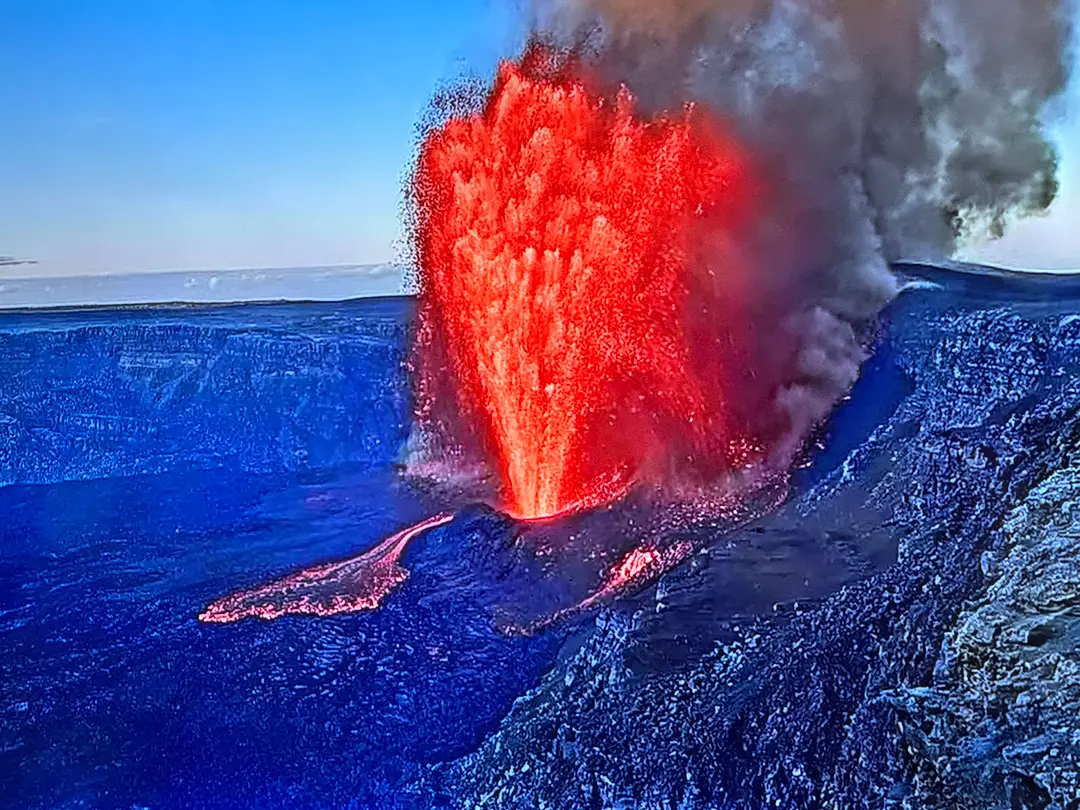
Episode 37 fountains have started!

R

Ryan Finlay

Episode 28

Episode 28

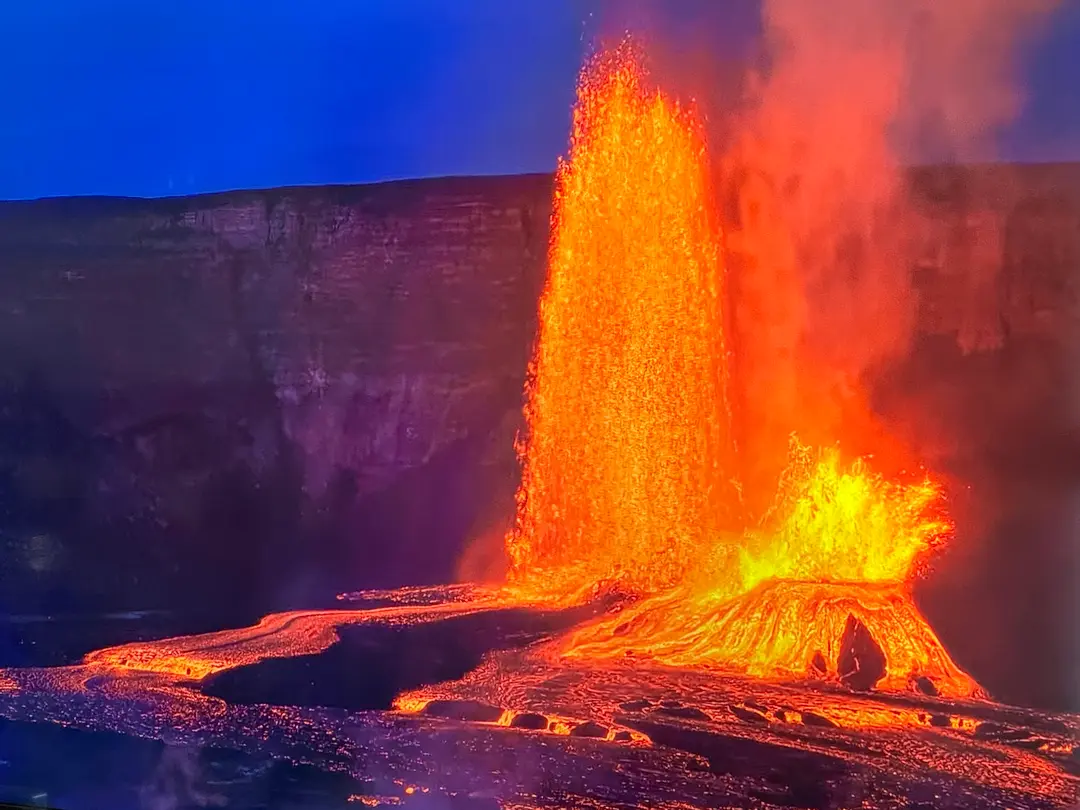
Update: Episode 28 of the ongoing Halemaʻumaʻu eruption ended abruptly at 1:20 p.m. HST on July 9, 2025, after 9 hours of continuous fountaining, the final 8 of which were high fountaining. The north vent stopped erupting at approximately 1:20 p.m. HST, marking the end of the episode. The south vent did not appear to activate at all during this episode and has been completely covered by new deposits. The growing cone around the north vent has begun to connect with the top of the surrounding cliff in some places. Lava fountains reached up to approximately 1200 ft (365 m) during this episode. Volcanic gas emissions have greatly decreased since the end of fountaining. Lava flows from this episode on the floor of Halemaʻumaʻu within the southern part of Kaluapele (Kīlauea caldera) may continue to exhibit slow movement or incandescence as they cool and solidify over the coming days. Slumping of molten cone material around the vent may also continue for the next 24 hours and can produce small, localized lava flows. The Uēkahuna tiltmeter (UWD) recorded about 15 microradians of deflationary tilt during this episode. The end of the eruption was coincident with a rapid change from deflation to inflation at the summit and a decrease in seismic tremor intensity. --------------------------------------- Episode 28 of the ongoing Halemaʻumaʻu eruption began at 4:10 a.m. HST on July 9 and is currently exhibiting a vent overflow and fountains reaching roughly 150 feet (45 meters). Past episodes have produced incandescent lava fountains over 1000 feet (300 meters) high that result in eruptive plumes up to 20,000 feet (6000 meters) above ground level. High fountaining associated with this episode has not yet begun but is expected to start soon, as tremor, deflation, and fountain height are all increasing. According to USGS weather stations just southwest of the summit, winds are blowing from the north-northeast direction at approximately 15 miles per hour, which suggests that volcanic gas emissions and volcanic material will be distributed south-southwest. Such trade winds typically turn more to the northeast during daylight hours. All eruptive activity is confined to Halemaʻumaʻu crater within Hawaiʻi Volcanoes National Park Three Kīlauea summit livestream videos that show eruptive lava fountains are available here: https://www.youtube.com/@usgs/streams

R

Ryan Finlay

Episode 24

Episode 24

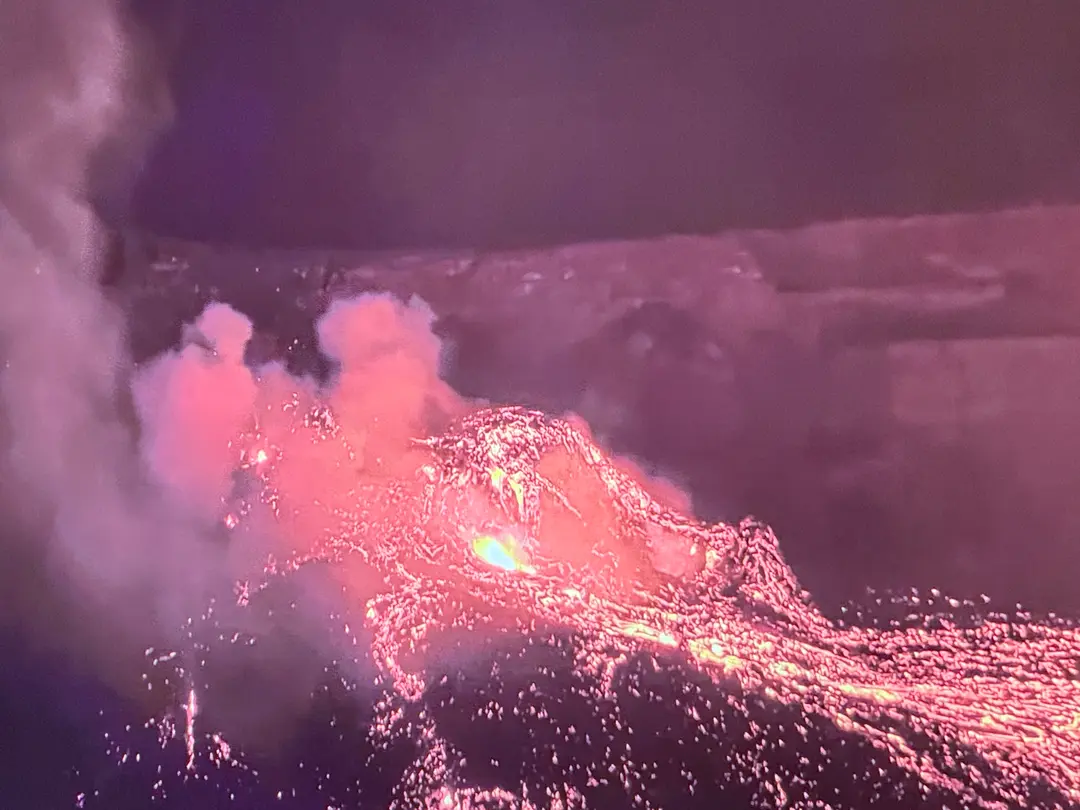
Episode 24 of the ongoing Halemaʻumaʻu eruption began at 8:55 PM HST on June 4 and is currently fountaining from the north vent. Episode 24 was preceded by sporadic spatter, gas pistoning, and hydrogen flames that began on the morning of June 3. At approximately 8:55 PM HST, episode 24 began with low dome fountaining accompanied by lava flows onto the crater floor. Small sustained lava fountains, less than about 100 feet (30 meters) high, began erupting from the north vent around 9:15 PM. Activity increased again around 10:10 PM, when fountain heights increased to 325 feet (100 meters) and by 10:40 reached over 980 feet (300 meters). Additionally, the fountain generated a plume that reached 16,500 feet (5,000 meters) above ground level by 10:50 PM and is increasing. At a tiltmeter near Uēkahuna (UWD), inflationary tilt reached just over 14 microradians since the end of the last episode; slightly more than the amount of deflationary tilt in episode 23. Seismic tremor began increasing and tilt at UWD switched from inflation to deflation at about 9:00 PM HST, close in time to the beginning of low fountaining. Most episodes of Halemaʻumaʻu lava fountaining since December 23, 2024, have continued for around a day or less and have been separated by pauses in eruptive activity lasting generally at least several days.

R

Ryan Finlay

Episode 18 Fountains Have Begun

Episode 18 Fountains Have Begun

Episode 18 high fountains have started!

R

Ryan Finlay