Case Study, Dominica: A Comparison With Hawaii In A Pandemic

Written with Philip Ong, reviewed and edited by Maren Purvis On March 29th, I decided to look for somewhere I could justifiably compare the effects of the pandemic to those we’ve seen on Hawai’i Island, trying to find a better match than already cited in the media. The examination included factors such as positive COVID-19 cases at the time, effective population density, climate and humidity, medical capacities, visitors being the primary vectors for infection, two primary population centers, and most importantly - it had to be another island. I came to the Commonwealth of Dominica, which saw its own legendary disaster in the last few years with Hurricane Maria in 2017, and has an history of epidemics in the 19th century, their own hot volcanic lake on the island, national parks. Geologically speaking, Dominica is one of the youngest islands in the Caribbean chain, as Hawai’i Island is the youngest livable island in Hawai’i. It seemed like a solid point of comparison to keep an eye on and track their progress with COVID-19 over time, as case loads between Hawai’i Island and Dominica were similar at the time. Today in Dominica, it has been 28 days since the last COVID-19 positive case. After a total of 16 cases of COVID-19 on their island, new cases ceased. There have been no deaths, and currently only 2 active cases remain on the small Caribbean island. The importance of the continued presence of active cases in Dominica after three weeks will become apparent in this case study’s key takeaways. The Dominican health response is being coordinated by National Epidemiologist, Dr. Shalauddin Ahmed. “Dominican citizens have adopted social distancing, good hand hygiene, and proper repository etiquette as part of the new normal for them. This has proven successful so far, and it is working. But we need to be weary about a possible second wave, the fight is far from over. We must continue these life saving behaviors.” “The COVID-19 pandemic is showing us that it is NOT about survival of the fittest, but survival of the smartest. That is to say, countries who ranked high in preparedness and health care index, have now been brought to their knees by this invisible pathogen - we do not want to become like them.” ~ Dr. Shalauddin Ahmed, Ministry of Health Covid Press Briefing, 5/1/2020 As of March 30th, Dominica’s contact tracing system was already clearly defined and implemented, testing and tracing was conducted to identify those in need of isolation. Today, contact tracing is on pause as all contacts have been cleared. The availability of testing has been a limitation that is hampering Dominica from implementing more widespread community testing, a key part of their exit strategy, as stated by Dr. Ahmed. Caribbean economies have also been badly impacted by COVID-19, especially with the collapse in tourism. The unemployment rate in Dominica has risen considerably at this point, similar to Hawai‘i’s, though statistics on Dominican unemployment have been difficult to find. Brent Barnette, Economic Growth Lead, says that 70% of businesses indicated severe impact and disruptions to their business thus far in Dominica, and likely for the remainder of 2020. The IMF donated $14M to Dominica, representing 89.4% of Dominica’s total quota. Prime Minister Skerrit plans to “kick in” income support within the month of May, though he recently rejected a proposal from the Dominica Social Security intended to assist Dominicans who have lost their jobs due to COVID-19. OK… What did Dominica do for COVID-19? - Large and early adoption of social distancing, hand washing, and masks, according to Dr. Ahmed. - Strong contact tracing program. Background on COVID-19 in Dominica: - The neighbor-islands ferry suspended operations in early March - March 22nd was the first case: A 54 year old who returned to Dominica from the UK. - Went into lock-down as of March 25th, but were slower than other nearby islands to implement restrictions. - All other Caribbean countries including the French islands of Guadeloupe and Martinique closed their borders and schools prior. - A medical brigade arrived March 26th (25 nurses, 5 doctors and 4 lab technicians) - As of April 12th; there was a high face mask adoption, with government leaders giving full speeches with protective surgical grade face masks. - State of Emergency was extended until June 30th; curfew extended until May 11th. - Antigen testing to confirm cleared cases are negative for COVID-19 prior to release from isolation. - Medical leaders desire to extend testing to all frontline workers, but there is limited testing available. - Businesses as of April 27th are now open from 6am to 4pm, a curfew remains in effect from 6pm-6am. - A ban on liquor sales was lifted April 27th, allowing for purchase only of liquor and not consumption at the point of sale. - A ban on large gatherings of more 10 persons is still in place, and physical distancing protocols are enforced. - Radio updates are a primary means of communication with the public, conducted three days a week. Radio stations out of Dominica can be found at: https://streema.com/radios/country/Dominica As of May 3rd, Dominica has conducted only 416 tests for COVID-19, with 16 positive results. Meanwhile, Hawai‘i Island is at 4,500 tests completed, with 74 positive results. Though the sample size is very small in Dominica, the hit-rate on positive antigen test results are higher than Hawai‘i, at 3.8% vs 1.6% on our island. Testing on a per-capita basis in Dominica is at 5.80 tests per 1,000 people, while Hawai‘i Island have conducted 24.6 tests per 1,000 people. While there are identifiable differences between Dominica and Hawai‘i, it’s interesting to analyze how a similar region is mitigating COVID-19 over the course of April. On one island, some measures were implemented widely early on (Contact tracing, economic stimulus, testing to determine recovery of positive cases), while on the other island these measures were implemented later, or revised more slowly, or have only recently been considered. My Two Key Takeaways For Hawai‘i: - Contact Tracing: The amount of time and care Dr. Ahmed and the Ministry of Health in Dominica takes with contact tracing cannot be understated. Details are provided on how many people were contacted, how many tests were administered, and how many were positive, with all the statistics are available for the public. The talk of contact tracing in Hawai’i is late to join the conversation at large, and in some ways our contact tracing protocols are not yet comparable to other regions successfully mitigating outbreaks for prolonged time periods. Major General Kenneth Hara’s recommendations on the expansion of contact tracing in our islands should be reconsidered by the Hawai‘i Department of Health. I question the risk analysis at the Hawai‘i Department of Health after incorporating the vectors for infection involved in resumed interstate and international travel to Hawai‘i, even with a partial resumption in tourism. - Testing Those to Be Released From Isolation: There is a reason that Dr. Ahmed and counterparts in South Korea are insisting on testing those to released from isolation: it helps ensure those cleared from COVID-19 are no longer shedding an active viral load. I would suggest that the CDC’s Symptom-Based Strategy for release on test positive cases of COVID-19 may be insufficient, and Hawai’i has “ample testing supplies and laboratory capacity“ to implement a better strategy. If a follow-up CDC Test-Based Strategy in Hawai‘i were to be performed at the end of the CDC’s Symptom-Based Strategy; 3 days since fever recedes, and 10 days from symptoms first appear, it would increase ![](https://paper-attachments.dropbox.com/s_B5A19603E868A5733C91A0315E65D74841BF95B48D41ACA4E15742D6ED2FD35A_1588770270526_image.png) both our public’s safety and our confidence that Hawai‘i’s available resources are being utilized as productively and efficiently as possible. Takeaways For Hawai‘i County Residents - Social distancing, hand-washing, and face-masks are proven effective. In many ways, the keys to dealing with COVID-19 are in your hands. Discover Dominica Authority participated The video on travel attached, we can find similarities where we do not expect them. Videos from Discover Dominica.
M

What is really amazing is that Dominica still only has a total of 18 cases.

Aug 19, 2020

Help Ken Boyer in His Recovery Journey

Help Ken Boyer in His Recovery Journey

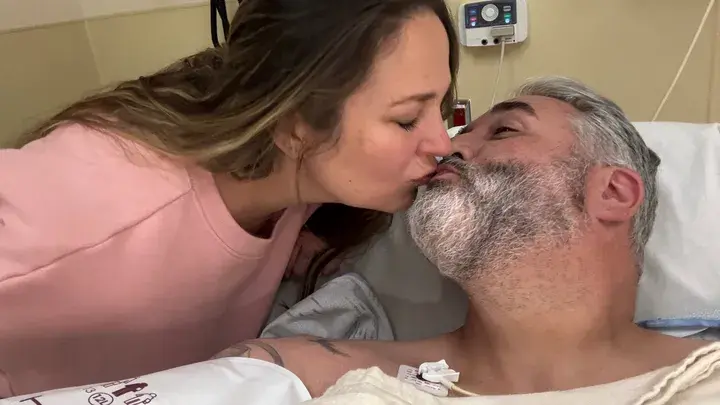
Our friend Ken Boyer is facing some pretty serious health challenges right now. Ken was an early friend and contributor to Hawaii Tracker over 8 years ago now. Any support you can give him would be appreciated and please keep him and his ohana in your prayers! 🙏 If anyone would like to support Ken and his family you can do so at the link below. https://www.gofundme.com/f/liver-transplant-journey-recovery-nsvfc Here is the post Ken shared on social media today: "Hello my dear friends and family, this is gonna be a long one, sorry but I feel it’s time I share my story that very few know. The last few years have been extremely difficult for me and my family. We’ve suffered tremendous loss and I found myself feeling ill also. Very weak, extremely tired and fatigued, abdominal pain, unable to think clearly and at times not even being able to form sentences, unable to remember things, etc…I was very concerned and went to the doctor. After a series of tests and such I was ultimately diagnosed in November of 2023 with End Stage (Stage 4) Liver Disease (Cirrhosis) as well as several other related diagnosis, the worst being Hepatic Encephalopathy. Went to a few doctors to review the diagnosis. One was very hopeful and said may be able to get a transplant. Another said I had 6 months to live and it sure felt like it. Since then I’ve changed my diet, saw many specialists, been back and forth to Oahu and even to California. It is believed that this disease came on from a fall I had into stagnant water on a river back in 2008. At that time I contracted Leptospirosis. That was very difficult to navigate for quite some time but I did get better and I thought that was that. Apparently not… It’s heavily affected my ability to work. We tried many things attempting to keep Rico’s Taco Shop open but it just wasn’t able to operate successfully without me being present. My wife did an amazing job of trying to keep it going. She was just working herself to death though. She ultimately was able to secure a great job and I have since been unable to find a way to operate Rico’s. This has been crushing to us in so many ways. My dream business, emotionally, financially…. Needless to say, it’s been a roller coaster. This has pushed us to the breaking point in so many ways and continues to daily. The hardest part is what I see it doing to my wife and kids. They are amazing. My wife has been by my side through all of this and I can’t thank her enough for all that she’s done. The kids are affected a lot and it kills me. I don’t have the energy to be there with them and present like I’d like to be. They are strong. They know daddy has some health issues but don’t understand the extent of it. My oldest daughter is aware but living in the mainland at this time. Unfortunately the cirrhosis has progressed and has made it impossible to do much. A lot of days I’m unable to drive even. There’s been countless trips to the ER and stays in the hospital due to this as well as many procedures and medications. Currently I’m on 12 medications. I will need a transplant to live and I’m working towards that. However I will be having to move to either Oahu or California to do so. I’m working on getting disability but have been denied and have to keep pushing for it. My days consist of falling asleep at all times out of nowhere, even standing up. Or the opposite, extreme insomnia. The day to day of all the symptoms is overwhelming and I won’t bore you with it all. Some are very ugly too, you don’t wanna know lol. The cost of ongoing care has been a huge burden on us as well and we do need help there also, somehow. I decided I needed to be transparent about this. I owe it to you all. You’ve all been such amazing friends and family that it only seems right. I’m sure some have wondered “what happened to that guy, he used to always be online”. Well, I just can’t be like I used to be. Life has become very mundane. The last thing I wanted to do was ask for any donations. We’ve been trying to do anything and everything we can to sell off everything to raise funds. We’re just not nearly close enough and currently not able to cover bills even. But my main concern is being able to get to Oahu or California when the time comes for a transplant. Which will happen sometime in the near future. I don’t know any other way to make this a reality. We have a lot of loose ends here that we will have to deal with financially before it’s possible to even leave and once I’m there I’ll need to rent a place to stay. Medical should cover the majority of the medical bills. Depending where I go. If I have to go to California the medical will be different and won’t cover nearly as much. But Oahu doesn’t have nearly as many viable livers annually. So that’s where the concern is as to where I’ll be going. Either way, no matter what happens, if you donate, it will be going to the ongoing cost of care, travel, housing, and anything else that is going to be out of pocket. If you can help, that’s fantastic and I appreciate it more than I could ever explain but a share means just as much. Thank you all! I will try to get back with everyone as much as I’m able to. Even a prayer!!! Love you all 🙏🏼"

R

Ryan Finlay

Episode 37 fountains have started

Episode 37 fountains have started

Episode 37 fountains have started!

R

Ryan Finlay

Episode 28

Episode 28

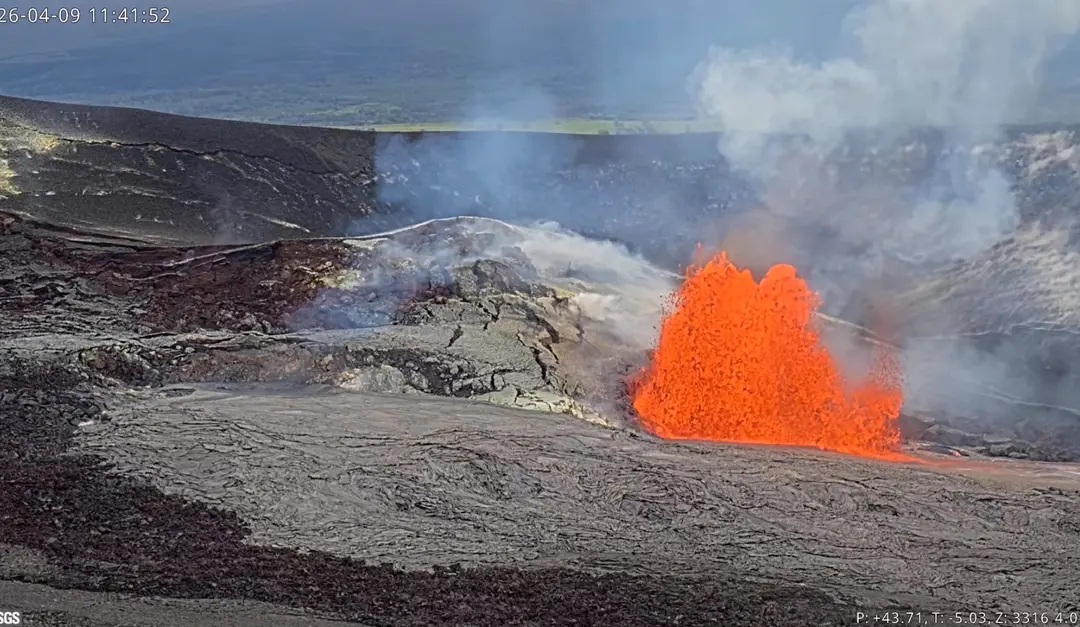
Update: Episode 28 of the ongoing Halemaʻumaʻu eruption ended abruptly at 1:20 p.m. HST on July 9, 2025, after 9 hours of continuous fountaining, the final 8 of which were high fountaining. The north vent stopped erupting at approximately 1:20 p.m. HST, marking the end of the episode. The south vent did not appear to activate at all during this episode and has been completely covered by new deposits. The growing cone around the north vent has begun to connect with the top of the surrounding cliff in some places. Lava fountains reached up to approximately 1200 ft (365 m) during this episode. Volcanic gas emissions have greatly decreased since the end of fountaining. Lava flows from this episode on the floor of Halemaʻumaʻu within the southern part of Kaluapele (Kīlauea caldera) may continue to exhibit slow movement or incandescence as they cool and solidify over the coming days. Slumping of molten cone material around the vent may also continue for the next 24 hours and can produce small, localized lava flows. The Uēkahuna tiltmeter (UWD) recorded about 15 microradians of deflationary tilt during this episode. The end of the eruption was coincident with a rapid change from deflation to inflation at the summit and a decrease in seismic tremor intensity. --------------------------------------- Episode 28 of the ongoing Halemaʻumaʻu eruption began at 4:10 a.m. HST on July 9 and is currently exhibiting a vent overflow and fountains reaching roughly 150 feet (45 meters). Past episodes have produced incandescent lava fountains over 1000 feet (300 meters) high that result in eruptive plumes up to 20,000 feet (6000 meters) above ground level. High fountaining associated with this episode has not yet begun but is expected to start soon, as tremor, deflation, and fountain height are all increasing. According to USGS weather stations just southwest of the summit, winds are blowing from the north-northeast direction at approximately 15 miles per hour, which suggests that volcanic gas emissions and volcanic material will be distributed south-southwest. Such trade winds typically turn more to the northeast during daylight hours. All eruptive activity is confined to Halemaʻumaʻu crater within Hawaiʻi Volcanoes National Park Three Kīlauea summit livestream videos that show eruptive lava fountains are available here: https://www.youtube.com/@usgs/streams

R

Ryan Finlay

Episode 24

Episode 24

Episode 24 of the ongoing Halemaʻumaʻu eruption began at 8:55 PM HST on June 4 and is currently fountaining from the north vent. Episode 24 was preceded by sporadic spatter, gas pistoning, and hydrogen flames that began on the morning of June 3. At approximately 8:55 PM HST, episode 24 began with low dome fountaining accompanied by lava flows onto the crater floor. Small sustained lava fountains, less than about 100 feet (30 meters) high, began erupting from the north vent around 9:15 PM. Activity increased again around 10:10 PM, when fountain heights increased to 325 feet (100 meters) and by 10:40 reached over 980 feet (300 meters). Additionally, the fountain generated a plume that reached 16,500 feet (5,000 meters) above ground level by 10:50 PM and is increasing. At a tiltmeter near Uēkahuna (UWD), inflationary tilt reached just over 14 microradians since the end of the last episode; slightly more than the amount of deflationary tilt in episode 23. Seismic tremor began increasing and tilt at UWD switched from inflation to deflation at about 9:00 PM HST, close in time to the beginning of low fountaining. Most episodes of Halemaʻumaʻu lava fountaining since December 23, 2024, have continued for around a day or less and have been separated by pauses in eruptive activity lasting generally at least several days.

R

Ryan Finlay

Episode 18 Fountains Have Begun

Episode 18 Fountains Have Begun

Episode 18 high fountains have started!

R

Ryan Finlay

Episode 17 Has Started

Episode 17 Has Started

Episode 17 of the ongoing Halemaʻumaʻu eruption began at 10:15 p.m. HST on April 7, 2025 with the start of lava overflowing from the south vent. Low spatter fountains from the south vent have been increasing from initial heights of 15-30 feet to 30-60 feet by 3:00 am HST on April 8. Tremor continues to gradually increase as well and is accompanied by slow deflation of the summit. - USGS Volcanoes

R

Ryan Finlay