Remembering Mauna Loa’s eruption on July 5–6, 1975 - USGS Volcano Watch

Mauna Loa erupted forty-six years ago this week, on July 5–6, 1975, in a 20-hour event with vents confined to the summit region (the area above 3,660 m/12,000 ft) and lava flows descending to just below 3,170 m (10,400 ft). This was the first eruption in 25 years, at the time the longest quiet stretch since 1843 (we are currently in the longest stretch at 37 years and counting). What is interesting about the 1975 eruption? It was the first Mauna Loa eruption monitored by modern instruments, so it provides clues as to what we might observe in the lead up to a future Mauna Loa eruption. In addition, while all of Mauna Loa’s 33 eruptions since 1843 started at the summit, about half only had vents in the summit region—like in 1975. Thus, the 1975 eruption is a useful and well-documented example of Mauna Loa summit eruptions: a common style of activity for this volcano. Mauna Loa showed clear signs of unrest beginning in April 1974 and had large seismic swarms in August and December 1974, with maximum daily earthquake counts of up to about 450 (August) and 1500 (December). Daily earthquake counts exceeded 100 most days from February through June 1975. Nothing unusual (given the previous months) was noticed during the day of July 5, 1975. However, that night at 10:51 p.m. HST, seismic activity rapidly escalated, and by 11:30 p.m., the USGS Hawaiian Volcano Observatory (HVO) notified authorities at the Hawaiʻi Volcanoes National Park and Hawaii County Civil Defense that an eruption appeared imminent. The eruption began July 5, 1975, at 11:42 p.m. with a line of fissures opening up across Mokuʻāweoweo Caldera. It was over by 7:30 p.m. on July 6. HVO staff arrived at Mauna Loa’s summit area 2 hours after the eruption started. They found lava fountains extending across Mokuʻāweoweo Caldera through to about 1 km (0.6 miles) southwest outside the caldera, with flows advancing west and southeast. By 2:25 a.m. on July 6, additional fissures opened up across North Pit crater and northeast outside the caldera. By dawn, fountains and lava flows had stalled within Mokuʻāweoweo and at the southwestern fissures. The active fissures were now only northeast of Mokuʻāweoweo, with ʻaʻā flows travelling north about 2 km per hour (1.2 mph) towards the Mauna Loa NOAA Weather Observatory road. Around 7:15 a.m., the fountains feeding the ʻaʻā flows stopped erupting. This was good news for the road—the lava got to within 165 m (180 yards) of it but did not cut it off. Weak fountaining continued elsewhere northeast of Mokuʻāweoweo until nightfall, when the eruption ended. Over the next few days it was unclear whether activity would pick up again, as inflation continued, dozens of earthquakes were felt, and hundreds more detected in Mauna Loa’s Northeast Rift Zone near Puʻuʻulaʻula. However, by July 10 seismic activity had waned, and between July 9–12 deflation was measured near Puʻuʻulaʻula. By July 12, HVO volcanologists were confident that the eruption was pau (finished)—for now. The next—and most recent—eruption in 1984 covered over 90% of the 1975 lava flows. However, flows are still exposed just south (mauka) of the Mauna Loa NOAA Weather Observatory road about 3.5 km (2.2 miles) before the observatory. How representative is the 1975 eruption of summit-only activity? Of the 14 summit-only eruptions for which we know the start and end date, a fifth (3 eruptions)—including 1975—lasted a day or less, 1 lasted a week or less, a quarter (4) lasted between 1 and 4 weeks, a third (5) lasted between 1 and 6 months, and 1 lasted several years. While we don’t know when, or how long, the next Mauna Loa eruption will be, it will start at the summit if it follows the pattern set by eruptions documented since 1843. Next, the eruption will either stay at the summit—like in 1975—or migrate down Mauna Loa’s flank. Before the eruption, we expect weeks to months of unrest with a rapid escalation of seismic activity immediately prior to the eruption. As our monitoring network is more extensive and sophisticated than in 1975, we expect higher overall earthquake counts. Whatever Mauna Loa does, HVO will continue to closely monitor the volcano to keep you informed. ----- Volcano Watch is a weekly article and activity update written by U.S. Geological Survey Hawaiian Volcano Observatory scientists and affiliates. This week’s article was written by Hawaiian Volcano Observatory geologist Natalia Deligne.
Help Ken Boyer in His Recovery Journey

Help Ken Boyer in His Recovery Journey

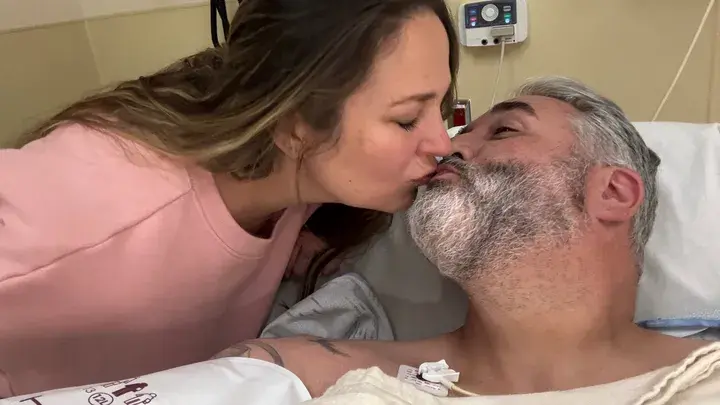
Our friend Ken Boyer is facing some pretty serious health challenges right now. Ken was an early friend and contributor to Hawaii Tracker over 8 years ago now. Any support you can give him would be appreciated and please keep him and his ohana in your prayers! 🙏 If anyone would like to support Ken and his family you can do so at the link below. https://www.gofundme.com/f/liver-transplant-journey-recovery-nsvfc Here is the post Ken shared on social media today: "Hello my dear friends and family, this is gonna be a long one, sorry but I feel it’s time I share my story that very few know. The last few years have been extremely difficult for me and my family. We’ve suffered tremendous loss and I found myself feeling ill also. Very weak, extremely tired and fatigued, abdominal pain, unable to think clearly and at times not even being able to form sentences, unable to remember things, etc…I was very concerned and went to the doctor. After a series of tests and such I was ultimately diagnosed in November of 2023 with End Stage (Stage 4) Liver Disease (Cirrhosis) as well as several other related diagnosis, the worst being Hepatic Encephalopathy. Went to a few doctors to review the diagnosis. One was very hopeful and said may be able to get a transplant. Another said I had 6 months to live and it sure felt like it. Since then I’ve changed my diet, saw many specialists, been back and forth to Oahu and even to California. It is believed that this disease came on from a fall I had into stagnant water on a river back in 2008. At that time I contracted Leptospirosis. That was very difficult to navigate for quite some time but I did get better and I thought that was that. Apparently not… It’s heavily affected my ability to work. We tried many things attempting to keep Rico’s Taco Shop open but it just wasn’t able to operate successfully without me being present. My wife did an amazing job of trying to keep it going. She was just working herself to death though. She ultimately was able to secure a great job and I have since been unable to find a way to operate Rico’s. This has been crushing to us in so many ways. My dream business, emotionally, financially…. Needless to say, it’s been a roller coaster. This has pushed us to the breaking point in so many ways and continues to daily. The hardest part is what I see it doing to my wife and kids. They are amazing. My wife has been by my side through all of this and I can’t thank her enough for all that she’s done. The kids are affected a lot and it kills me. I don’t have the energy to be there with them and present like I’d like to be. They are strong. They know daddy has some health issues but don’t understand the extent of it. My oldest daughter is aware but living in the mainland at this time. Unfortunately the cirrhosis has progressed and has made it impossible to do much. A lot of days I’m unable to drive even. There’s been countless trips to the ER and stays in the hospital due to this as well as many procedures and medications. Currently I’m on 12 medications. I will need a transplant to live and I’m working towards that. However I will be having to move to either Oahu or California to do so. I’m working on getting disability but have been denied and have to keep pushing for it. My days consist of falling asleep at all times out of nowhere, even standing up. Or the opposite, extreme insomnia. The day to day of all the symptoms is overwhelming and I won’t bore you with it all. Some are very ugly too, you don’t wanna know lol. The cost of ongoing care has been a huge burden on us as well and we do need help there also, somehow. I decided I needed to be transparent about this. I owe it to you all. You’ve all been such amazing friends and family that it only seems right. I’m sure some have wondered “what happened to that guy, he used to always be online”. Well, I just can’t be like I used to be. Life has become very mundane. The last thing I wanted to do was ask for any donations. We’ve been trying to do anything and everything we can to sell off everything to raise funds. We’re just not nearly close enough and currently not able to cover bills even. But my main concern is being able to get to Oahu or California when the time comes for a transplant. Which will happen sometime in the near future. I don’t know any other way to make this a reality. We have a lot of loose ends here that we will have to deal with financially before it’s possible to even leave and once I’m there I’ll need to rent a place to stay. Medical should cover the majority of the medical bills. Depending where I go. If I have to go to California the medical will be different and won’t cover nearly as much. But Oahu doesn’t have nearly as many viable livers annually. So that’s where the concern is as to where I’ll be going. Either way, no matter what happens, if you donate, it will be going to the ongoing cost of care, travel, housing, and anything else that is going to be out of pocket. If you can help, that’s fantastic and I appreciate it more than I could ever explain but a share means just as much. Thank you all! I will try to get back with everyone as much as I’m able to. Even a prayer!!! Love you all 🙏🏼"

R

Ryan Finlay

Episode 37 fountains have started

Episode 37 fountains have started

Episode 37 fountains have started!

R

Ryan Finlay

Episode 28

Episode 28

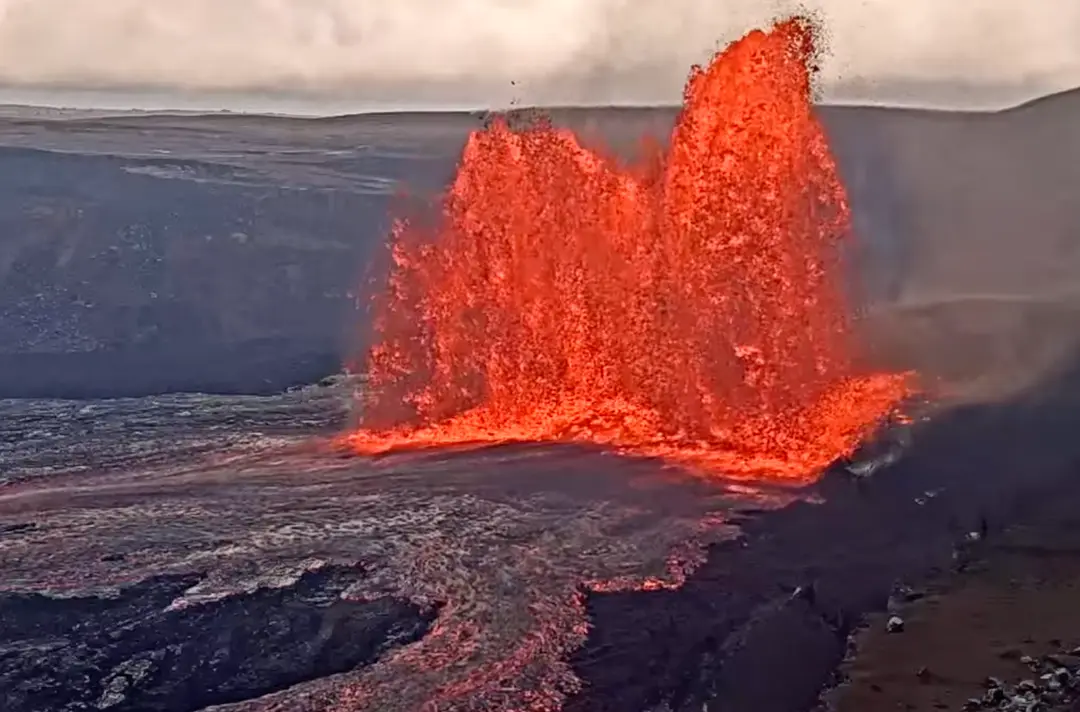
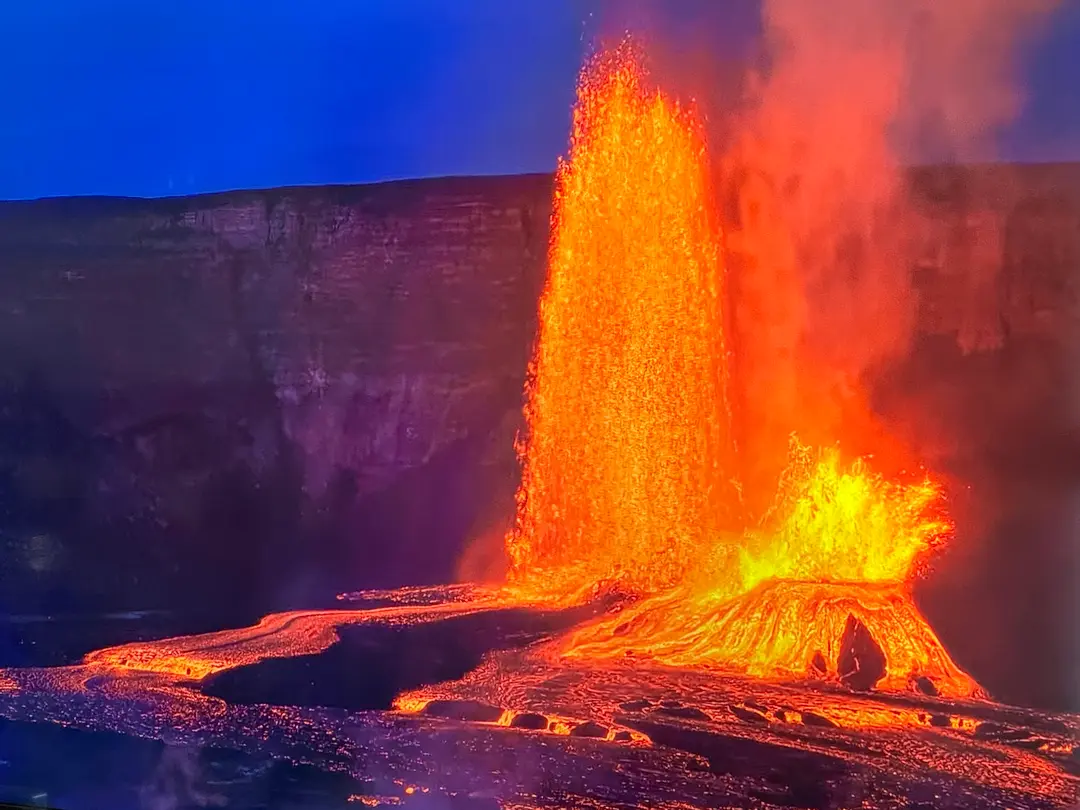
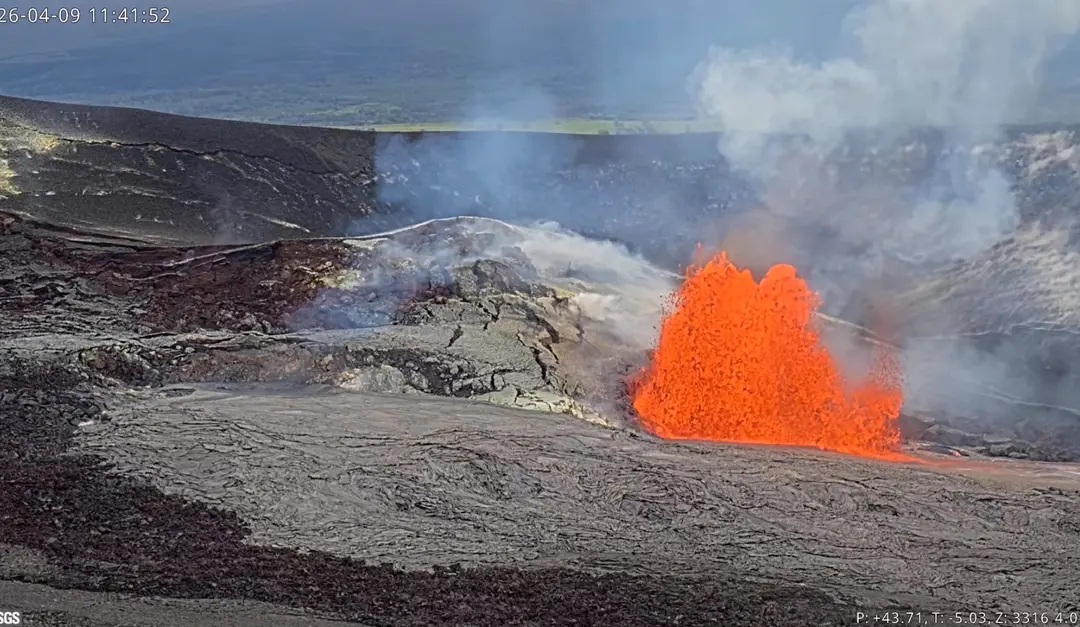
Update: Episode 28 of the ongoing Halemaʻumaʻu eruption ended abruptly at 1:20 p.m. HST on July 9, 2025, after 9 hours of continuous fountaining, the final 8 of which were high fountaining. The north vent stopped erupting at approximately 1:20 p.m. HST, marking the end of the episode. The south vent did not appear to activate at all during this episode and has been completely covered by new deposits. The growing cone around the north vent has begun to connect with the top of the surrounding cliff in some places. Lava fountains reached up to approximately 1200 ft (365 m) during this episode. Volcanic gas emissions have greatly decreased since the end of fountaining. Lava flows from this episode on the floor of Halemaʻumaʻu within the southern part of Kaluapele (Kīlauea caldera) may continue to exhibit slow movement or incandescence as they cool and solidify over the coming days. Slumping of molten cone material around the vent may also continue for the next 24 hours and can produce small, localized lava flows. The Uēkahuna tiltmeter (UWD) recorded about 15 microradians of deflationary tilt during this episode. The end of the eruption was coincident with a rapid change from deflation to inflation at the summit and a decrease in seismic tremor intensity. --------------------------------------- Episode 28 of the ongoing Halemaʻumaʻu eruption began at 4:10 a.m. HST on July 9 and is currently exhibiting a vent overflow and fountains reaching roughly 150 feet (45 meters). Past episodes have produced incandescent lava fountains over 1000 feet (300 meters) high that result in eruptive plumes up to 20,000 feet (6000 meters) above ground level. High fountaining associated with this episode has not yet begun but is expected to start soon, as tremor, deflation, and fountain height are all increasing. According to USGS weather stations just southwest of the summit, winds are blowing from the north-northeast direction at approximately 15 miles per hour, which suggests that volcanic gas emissions and volcanic material will be distributed south-southwest. Such trade winds typically turn more to the northeast during daylight hours. All eruptive activity is confined to Halemaʻumaʻu crater within Hawaiʻi Volcanoes National Park Three Kīlauea summit livestream videos that show eruptive lava fountains are available here: https://www.youtube.com/@usgs/streams

R

Ryan Finlay

Episode 24

Episode 24

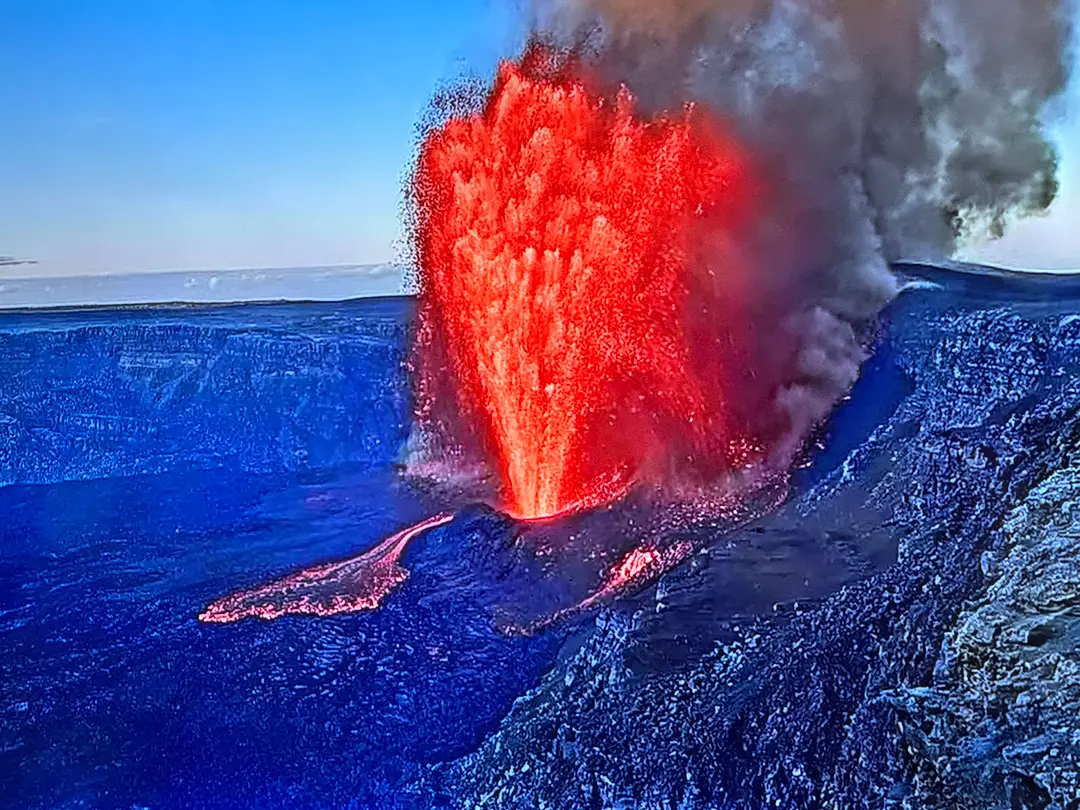
Episode 24 of the ongoing Halemaʻumaʻu eruption began at 8:55 PM HST on June 4 and is currently fountaining from the north vent. Episode 24 was preceded by sporadic spatter, gas pistoning, and hydrogen flames that began on the morning of June 3. At approximately 8:55 PM HST, episode 24 began with low dome fountaining accompanied by lava flows onto the crater floor. Small sustained lava fountains, less than about 100 feet (30 meters) high, began erupting from the north vent around 9:15 PM. Activity increased again around 10:10 PM, when fountain heights increased to 325 feet (100 meters) and by 10:40 reached over 980 feet (300 meters). Additionally, the fountain generated a plume that reached 16,500 feet (5,000 meters) above ground level by 10:50 PM and is increasing. At a tiltmeter near Uēkahuna (UWD), inflationary tilt reached just over 14 microradians since the end of the last episode; slightly more than the amount of deflationary tilt in episode 23. Seismic tremor began increasing and tilt at UWD switched from inflation to deflation at about 9:00 PM HST, close in time to the beginning of low fountaining. Most episodes of Halemaʻumaʻu lava fountaining since December 23, 2024, have continued for around a day or less and have been separated by pauses in eruptive activity lasting generally at least several days.

R

Ryan Finlay

Episode 18 Fountains Have Begun

Episode 18 Fountains Have Begun

Episode 18 high fountains have started!

R

Ryan Finlay

Episode 17 Has Started

Episode 17 Has Started

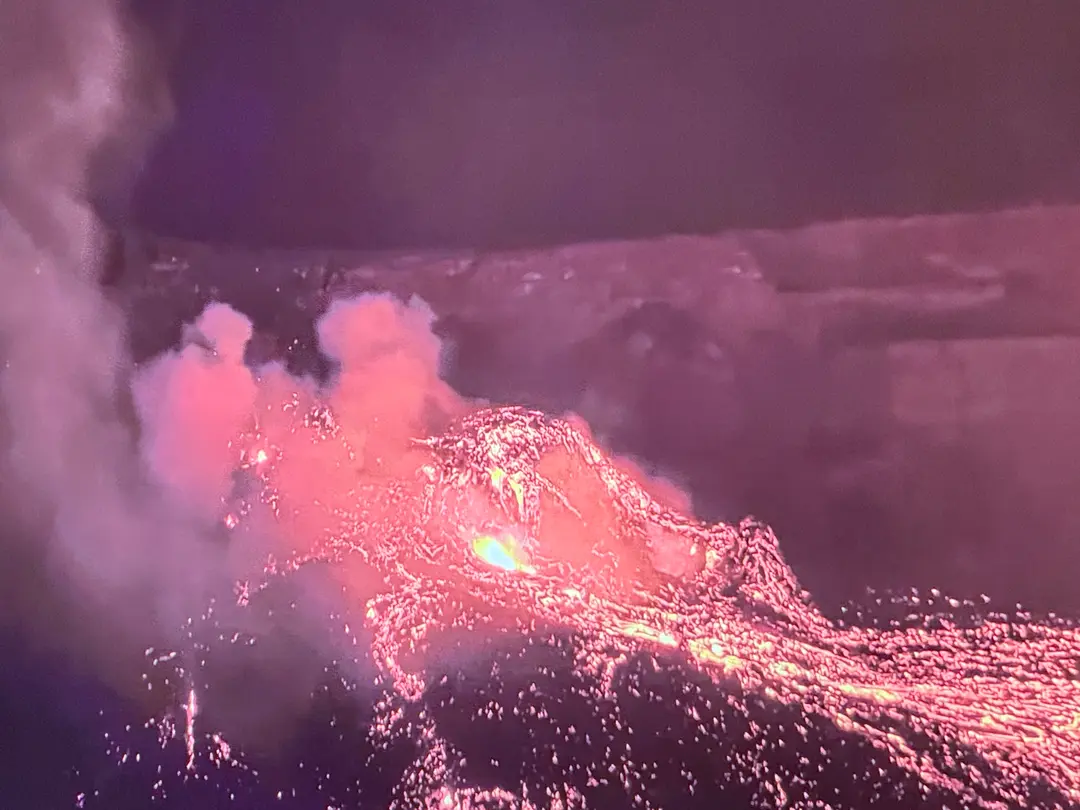
Episode 17 of the ongoing Halemaʻumaʻu eruption began at 10:15 p.m. HST on April 7, 2025 with the start of lava overflowing from the south vent. Low spatter fountains from the south vent have been increasing from initial heights of 15-30 feet to 30-60 feet by 3:00 am HST on April 8. Tremor continues to gradually increase as well and is accompanied by slow deflation of the summit. - USGS Volcanoes

R

Ryan Finlay